
Solid posing is one of the 12 principles. We all know we need it, and many of us have seen what great poses can do, but how do we get better at creating good poses? Improvement comes with time and practice, but it is important to have your practice be focused. So lets start with posing itself and then we can expand on that with ways to get better.
What is a good pose?
Its very easy for this idea of “posing” to enter into the realm of aesthetic and personal taste. To avoid an abstract discussion, lets develop some objective ideas to get behind it and give more meaning to this broad term and concept.
- Communicates an idea or feeling – the pose should emphasize and reinforce how the subject is feeling, what they are doing and thinking
- Interesting to look at – should use visual artistic principles to create a pose that attracts and holds the audiences attention
- Incorporates where the subject came from and where they will go – using consecutive poses to highlight the subjects change of emotion, action, and thinking over time
If you have taken any art classes or read a book about drawing you are probably familiar with 1 and 2 from the list above. This is when an artist uses tools like composition, scale, rhythm, simple v. complex, color and value in addition to the pose itself to communicate an idea or story to their audience. The final point (3) is more unique to sequential art forms (graphic novels, picture books, storyboards, animation, etc.) in that it also incorporates time into the equation.

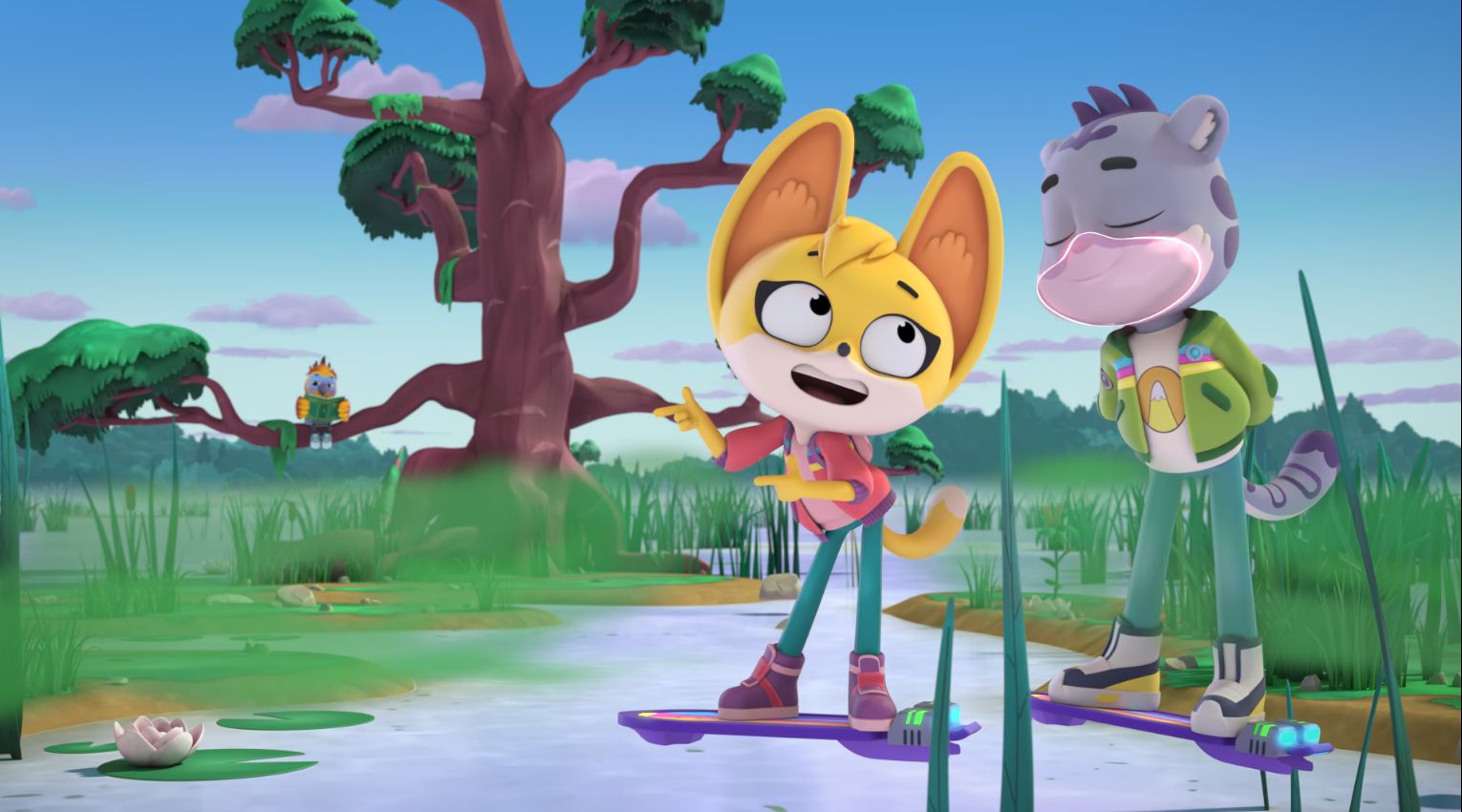
By understanding where a character needs to go, you can create preceding poses that contrast and highlight the subjects change through their line-of-action (LOA), expressions, and extremes.
Where do I start?
So now we know what we mean by solid posing and that it’s important, but how do we get better? Personal studies are usually a great place to start and I believe that is true here as well. Look at figure drawings and character artists to see how the human body can be posed and pushed to communicate feelings. Follow accounts on social media, or better yet collect pictures you find inspiring to continually refresh your understanding of posing. As you look through images and especially when you see something that feels like a great pose, pause and ask “what makes this a good pose?”, or “how is this pose communicating a feeling of [what you are feeling]?”.
Taking a look
When studying the overall posing, I like to consider larger aspects and move down to the details. This is often how I pose out characters when working so it makes sense to me to study in this way. Here are some of the aspects I think about when studying poses:
Composition(placement, scale, relationship, etc.), simple v. complex, eyeline, leading lines, detail v. minimal/simplified details

Silhouette, Line-Of-Action, Leading Lines, Simple v. Complex, Straight v. Curve(rhythm)

All of these pieces work together to create interesting poses, and by taking a closer look and studying what works, it will be easier to create better poses in our own work. I highly suggest this exercise, it’s easy, fun, and is not a huge time commitment making it a great place to start. If you want to give it a try, here are some shows and films I’ve enjoyed taking a closer look at:
- True and the Rainbow Kingdome (on Netflix)
- Creature Cases (on Netflix)
- Bad Guys
- How to Train Your Dragon 2
- Into the Spider-Verse
- Across the Spider-Verse
- Encanto
- Big Hero 6
Other ways to practice
Draw it out
In addition to visually analyzing poses, you can practice drawing/sketching the human figure as a means of study. This can be especially helpful if you are a kinesthetic learner. Don’t worry about how it looks, like all sketches these are visual notes for yourself.
Figure drawing is possibly the best practice when it comes to trying to improve your posing. It teaches you the range of motion and limitations of the human body as well as challenges you to think creatively to capture and/or communicate your idea through a pose.
Look for local figure drawing groups to join so that you can learn alongside other artists. If there are no local groups, there are also online options. One that I really enjoy is Love Life Drawing because it is free to join, has great resources with a built in community, and paid class options.
Recreate it
Like painters recreating artwork from masters before them as a way to study, we can do the same as animators. If there is a series of poses that you really enjoy or it just feels great to watch, try to capture it and recreate it yourself. Personally I have learned so much by trying to recreate 2D animation sequences with 3D characters, but ultimately finding something that inspires you will help you practice and dive into what is making the shot work.
Timed poses and actions
In terms of daily practice, creating time limited exercises can help form a strong habit or maybe even become a warm-up routine before starting working. Try recreating a pose with a 3D character as a way to practice your poses. If you are wanting to improve your speed, be sure to start with an amount of time that you can actually recreate the pose, then every week or so take away 15-30 seconds(or a minute depending on how much time you are starting with) from that total time, till you bring your time down closer to the target time you desire.
Similarly, you can try animating simple actions this way too. Things like picking up a ball, sitting down, standing up, etc. Keep it loose and think of it as an exercise. You can continue with the same actions but maybe focus on different aspects (posing, timing, personality, etc.).
Keep it fun!
Hopefully some of these ideas help give you a spark and encourage you to keep practicing. I’ve been trying these things out myself and trying to form solid habits and practices to continue improving. One thing that I believe is really important is to make it fun. Try to reduce stress by keeping your expectations in check and scope simple. If you start to get bogged down or discouraged don’t isolate yourself, try reaching out to a friend for help, or post in an animation group to get some feedback and encouragement. It’s okay to stop and take a breath, or even a break for a bit so that you can come back fresh.
Till next time, keep practicing and have fun!
 Justin Milgate
Leave a comment